Why Affordable eSIMs Are Changing Global Roaming
Affordable eSIM Plans Compared for Budget Travelers
Most travelers overpay for roaming, yet a cheap eSIM plan can slash your connectivity costs by over 90%. It works by downloading a digital SIM profile directly to your phone, letting you switch to local networks instantly. The key benefit is avoiding physical cards and hidden fees—just pay a flat, budget-friendly rate for data you actually use. To start, simply purchase a plan online, scan a QR code, and activate it before you depart.
Why Affordable eSIMs Are Changing Global Roaming
Affordable eSIMs are dismantling the high cost of staying connected abroad. Cheap eSIM plans allow you to bypass expensive carrier roaming fees by purchasing local or regional data packages directly on your phone for a fraction of the price. This shift means you can activate a budget-friendly plan in minutes via an app, avoiding the hassle of physical SIM cards and airport kiosk markups. Why is this changing global roaming? Because it empowers any traveler to control costs and stay online without financial surprise, making connectivity a cheap, seamless utility rather than a luxury expense. Even light users can now justify data for maps and messaging, fundamentally altering expectations of affordable travel communication.
How eSIM Technology Lowers Connectivity Costs
eSIM technology lowers connectivity costs by eliminating the need for physical SIM production, packaging, and shipping, directly reducing overhead for providers of cheap esim plans. This structural saving allows carriers to offer budget-friendly roaming options without manufacturing markups. Users avoid per-trip SIM purchases or shipping fees, paying only for data allowances. The digital provisioning enables instant activation on local networks at wholesale rates, bypassing expensive bilateral roaming agreements that inflate traditional costs.
- No physical SIM means no manufacturing or logistics expenses are passed to the user.
- Remote provisioning allows carriers to switch between networks mid-trip, selecting the cheapest local rate.
- Over-the-air activation eliminates retail markup and airport kiosk surcharges.
Comparing Traditional SIM Cards to Digital Profiles

Comparing traditional SIM cards to digital profiles reveals a crucial shift in cost and convenience. A physical SIM is a fixed, single-network token that requires swapping or purchasing a new card for each country, often incurring roaming fees. In contrast, a digital eSIM profile allows instant activation of a local data plan from your device’s settings without handling a chip. This eliminates shipping costs and enables users to switch between affordable plans from multiple providers mid-trip. While a physical SIM offers familiarity and simple reuse across phones, a digital profile provides superior flexibility for hopping onto cheap eSIM plans tailored per destination.
| Aspect | Traditional SIM Card | Digital Profile (eSIM) |
|---|---|---|
| Activation | Requires physical card insertion | Scan QR code or download profile |
| Switching plans | Replace card or buy new one | Switch profiles instantly in settings |
| Cost for multiple destinations | Multiple cards, shipping fees | One profile per plan, no shipping |
| Device compatibility | Any phone with slot | Requires eSIM-capable device |
Who Benefits Most from Budget-Friendly Virtual SIMs
Budget-friendly virtual SIMs primarily benefit frequent cross-border travelers and remote workers who need connectivity across multiple countries without physical SIM swaps. These users avoid high per-country roaming fees, instead activating a single low-cost eSIM that covers their entire itinerary. Digital nomads gain instant data access upon landing, bypassing airport SIM kiosks and local registration hurdles. Similarly, casual tourists on short trips save money by purchasing a cheap eSIM plan for their destination instead of paying daily roaming charges from their home carrier. Budget-conscious backpackers stretch their travel funds by selecting data-only eSIMs for navigation and messaging apps.
Frequent travelers, remote workers, digital nomads, and budget-conscious tourists benefit most from cheap eSIM plans, gaining affordable cellular access without physical SIM swaps or high roaming fees.
Key Factors That Drive Down eSIM Prices
The biggest factor driving down eSIM prices is **fierce competition among regional providers**. Instead of just one giant network, you get lean, local carriers fighting for your data with hyper-specific plans, slashing costs. Another massive lever is **aggressive bulk data purchasing**. These cheap eSIM operators buy massive data allowances from host networks at wholesale rates, then pass the savings directly to you. Finally, the complete removal of physical inventory—no plastic cards, no packaging, no shipping—eliminates overhead, allowing providers to offer tiny, pay-as-you-go data bundles for a few dollars that are still profitable.
Regional Competition Among Local Carriers
When local carriers in the same region aggressively compete for subscribers, they slash prices on eSIM data packs specifically for travelers. A carrier in Thailand, for example, might offer a 15-day eSIM for the same price that a rival charges for 10 days, directly lowering your cost. This regional carrier rivalry forces providers to constantly outdo each other with cheaper per-GB rates and longer validity periods for cross-border plans. You benefit from this price war by simply choosing the most aggressive regional deal.
No Physical Manufacturing or Shipping Costs
eSIM plans achieve lower prices by entirely eliminating physical SIM card production and global logistics. No plastic, packaging, or inventory warehousing exists, which removes a significant per-unit cost from the provider’s expenses. This zero inventory overhead allows carriers to offer plans at a fraction of traditional prices, as there are no shipping fees, customs charges, or retail distribution markups passed to the user. Activation occurs digitally in seconds, bypassing the entire physical supply chain entirely.
Seasonal Promotions and Data-Only Packages
Snagging an eSIM data-only package often slashes costs because you skip voice minutes and SMS you never use. Many providers launch seasonal promotions around holidays or major events, offering temporary price cuts or bonus data for the same price. These flash sales let you grab high-capacity plans for a fraction of regular rates, but they usually expire fast. Booking a data-only plan during a Black Friday or summer travel sale can cut your per-GB cost in half compared to standard monthly options. Just remember to check the validity window so your cheap deal doesn’t vanish mid-trip.
Seasonal promotions temporarily slash eSIM prices, and data-only packages eliminate wasteful voice/text costs, making them the cheapest way to stay connected.
Top Destinations with the Most Affordable Virtual Plans
For budget travelers, cheap eSIM plans truly shine in Japan, South Korea, and Turkey, where virtual providers offer local data for under $5 a week. In Japan, you can snatch 3GB for around $4, while South Korea’s fast 5G plans often start at $3 for 1GB. Turkey’s plans can be as low as $2 for 7 days, perfect for Istanbul exploring. Quick Q&A: *What’s the cheapest destination for a 7-day eSIM? Turkey wins with plans often under $3 for basic data.* Stick to these spots for low-cost, hassle-free connectivity without physical SIM swaps.
Budget eSIMs for Travel Through Europe
Navigating Europe on a budget means ditching pricey roaming for affordable regional eSIM plans that cover multiple countries. Pick a plan that pools data across the Schengen zone, allowing seamless connectivity from Paris to Prague. Pocket-friendly options from carriers like Airalo or Holafly let you buy small data bundles, avoiding overpaying for unused gigabytes. Keep your primary SIM for banking while using the eSIM for maps and messaging.
- Search for “Europe regional” eSIMs, not single-country ones, for the best value.
- Activate your eSIM right before takeoff to maximize the plan’s duration across your trip.
- Select a plan with hotspot sharing to cut costs by connecting multiple devices or travel mates.
Low-Cost Data Options in Southeast Asia
For budget travelers, affordable eSIM data in Southeast Asia is a game-changer, with plans often starting under $5 for a week. You can grab a regional eSIM covering Thailand, Vietnam, and Indonesia for as little as $8, avoiding local SIM queues. Just check your phone’s compatibility, as some older models skip eSIM support entirely. Apps like Airalo and Holafly offer straightforward top-ups, letting you pick local-only or multi-country packs. Sticking to 4G instead of 5G can squeeze out extra savings, perfect for maps and messaging.
Discounted Virtual SIMs for North America Travel
For budget-friendly travel across the US and Canada, scoring discounted virtual SIMs for North America travel is a game-changer. Choose a regional plan covering both countries to avoid roaming fees, often available for around $10–20 for 7–14 days with usable data. Look for plans offering at least 5GB for navigation and social media, with easy top-ups via app if you run low. Many providers offer flash sales or promo codes for new users, slashing prices further.
- Pick a “North America” plan covering the US and Canada in one package.
- Watch for limited-time discounts on 10GB+ data bundles.
- Use a referral code from a friend for an extra 10–15% off.
How to Spot a Genuinely Low-Cost Provider
A genuinely low-cost eSIM provider prioritizes transparent pricing over gimmicks. Look for unlimited data at a fixed monthly rate, not tiered throttling after a small cap. They disclose exact speeds (e.g., 5Mbps) upfront, avoiding vague “fair usage” language. Authentic low-cost operators offer simple, long-duration global passes without expensive single-country add-ons. Verify they provide a local number and tethering without hidden fees. Finally, a true low-cost source publishes clear refund policies for unused Japan eSIM data; if terms are buried or complex, it’s likely a trap for upsells.
Hidden Fees Versus Transparent Pricing Models
A genuinely low-cost eSIM provider relies on transparent pricing, not hidden fees. Beware of plans that advertise a low base rate but add service charges, recovery fees, or top-up expiry penalties at checkout. A transparent model clearly states the total cost for the chosen data allowance and validity period upfront, with no surprise deductions. Scrutinize the fine print for activation costs or throttling triggers. Transparent pricing models allow you to calculate the exact per-gigabyte expense instantly, making it simple to compare cheap eSIM plans without hidden financial traps.
Reading the Fine Print on Data Speeds and Throttling
When evaluating a cheap eSIM, scrutinize the fine print for “fair usage” policies that trigger speed throttling after a specific data threshold. Even “unlimited” plans often reduce speeds to 2G or 3G levels once you exceed, say, 5GB. Look for exact throttled speed caps (e.g., 1 Mbps) in the terms, as vague “reduced speeds” can make streaming or video calls unusable. Q: How can I test if a cheap eSIM will throttle me severely? A: After activation, run a speed test upon exceeding half your data cap, then compare results to the provider’s stated throttled speed—if the gap is extreme, avoid renewal.
User Reviews and Community-Rated Bargains
Scour review platforms and travel forums for community-rated eSIM bargains, focusing on users who verify data speeds in real-world conditions. Genuinely cheap providers often emerge from repeated mentions in Reddit threads or Trustpilot deep-dives, where travelers share actual download results and activation hiccups. Filter by recent reviews to avoid outdated deals, and prioritize providers with a high volume of positive feedback for consistent throttling-free performance. A bargain is only genuine when the community confirms it delivers promised speeds without hidden cuts.

User reviews expose the real value behind rock-bottom eSIM prices, separating advertised deals from community-verified performance.
Prepaid vs. Pay-As-You-Go for Frugal Travelers
For frugal travelers using cheap eSIM plans, choosing between prepaid and pay-as-you-go hinges on your itinerary’s predictability. Prepaid eSIMs offer a fixed data bucket for a set price, ideal for those with a known trip length and a consistent daily data need, as you avoid bill shock. Pay-as-you-go eSIMs, conversely, charge per megabyte consumed, which benefits light users or highly variable schedules; you only pay for what you use. The critical detail is that prepaid plans often have a strict validity period, while pay-as-you-go funds typically last much longer. For a 10-day trip needing 1GB daily, a cheap prepaid eSIM is usually the most cost-effective, foolproof option.
Short-Term Low-Cost Data Bundles
For frugal travelers, Short-Term Low-Cost Data Bundles are a game-changer with cheap eSIM plans. You buy a tiny, fixed amount of data—like 1GB or 3GB—that expires in 7 to 15 days, perfect for a long weekend or single-country hop. These bundles avoid the commitment of a full monthly prepaid plan. Simply activate via an app before you land, and you’re online without hunting for local SIMs. Just keep an eye on your usage widget, as running out mid-trip means buying another bundle instead of topping up. They’re ideal when you need navigation and messaging, not streaming.
Long-Term Budget Plans Without Contracts
For frugal travelers, long-term budget plans without contracts deliver the best value by slashing per-gigabyte costs for extended trips. These prepaid eSIM data bundles often span 30, 60, or 90 days, providing generous high-speed allowances at a fraction of pay-as-you-go rates. You pay once upfront for the entire period, enjoying stable connectivity without monthly commitments or surprise top-ups. This model eliminates the financial drain of daily passes while giving you the freedom to switch providers if a cheaper regional option appears later. Your wallet remains safe from hidden fees, and the constant savings make extended travel far more affordable.
Refillable Low-Cost Options for Frequent Trips
For frugal travelers making frequent trips, refillable low-cost eSIM plans are the smartest choice over fixed prepaid packages. You avoid wasted data because you only top up when needed, often paying per-gigabyte rates below $3. Plans from providers like Airalo or Nomad let you extend a local plan in seconds via their app, without buying a new eSIM. This flexibility means you never overpay for a 30-day plan when you only need five days. By refilling a single, low-cost base plan across multiple trips, you slash per-trip costs and eliminate SIM-swapping hassle.
Regional Providers Offering Unbeatable Value
When hunting for cheap eSIM plans, regional providers often beat the global giants on price and simplicity. Instead of paying for coverage in dozens of countries you won’t visit, these carriers focus on a specific area—like Southeast Asia or Western Europe—offering unbeatable value through local data rates. You’ll find dirt-cheap 30-day packages with high data caps for a fraction of what a worldwide plan costs. Plus, setup is identical: scan a QR code and you’re online. Perfect for trips centered on one region, they skip the fluff to give you exactly the connectivity you need without paying for extras.
Asia-Focused Carriers with Steep Discounts
For travelers hopping across Thailand, Vietnam, or Japan, Asia-focused carriers with steep discounts deliver data packs that undercut global giants by up to 70%. These regional specialists optimize local networks, slashing per-GB costs for short trips. Instead of paying $20 for 1GB, you grab 10GB for under $5 from providers like Dtac or 3HK. The catch? Coverage is laser-focused on specific countries, so you save big but stick to their target zones.
- Top carriers offer 5GB–15GB packs for $3–$8, valid 7–15 days.
- Many include free social media data on platforms like LINE or WeChat.
- Activation is instant via QR code, with no ID submission required.
European Networks with Multi-Country Bargains
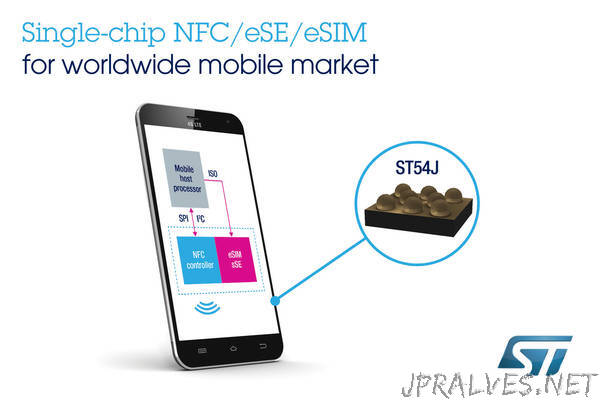
For travelers crossing borders, European Networks with Multi-Country Bargains offer exceptional value via eSIM plans. Providers like Airalo, Holafly, and Orange Holiday include data pools valid across multiple EU states, often covering 30+ countries for one flat rate. These plans typically avoid per-country roaming fees, letting you use a single eSIM for trips through France, Spain, and Germany. The best cheap eSIM plans in this category bundle 5–20GB with regional validity lasting 7–30 days. Multi-country data roaming ensures seamless connectivity without swapping SIMs, making short regional tours cost-effective.
| Provider | Coverage | Data | Duration |
|---|---|---|---|
| Airalo | 39 European countries | 1–20 GB | 7–30 days |
| Holafly | 32 European countries | Unlimited (fair use) | 5–90 days |
| Orange Holiday | 30 European countries | 10–50 GB | 14–28 days |
Budget-Friendly Amercian Coverage for Visitors
For visitors needing budget-friendly American coverage, regional eSIM providers like Visible+ and US Mobile offer prepaid data bundles that undercut major carrier roaming rates. These plans typically tap T-Mobile or Verizon networks, delivering reliable 5G access for under $20 per week. By forgoing contract commitments and focusing on high-speed data caps rather than unlimited talk, travelers on a tight budget can stream maps and use messaging apps without overpaying. Selecting a plan with a short validity period—such as 7 or 15 days—prevents buying unused days. This approach ensures visitors only pay for the precise coverage window they need while staying connected across major US metro areas.
Budget-friendly American coverage for visitors comes from regional eSIMs that offer cheap, short-term data bundles on major US networks, eliminating costly roaming fees.
How to Activate a Virtual SIM Without Breaking the Bank
To activate a virtual eSIM without breaking the bank, prioritize prepaid data-only plans from regional aggregators that offer instant QR-code activation. Avoid postpaid carriers by purchasing a cheap eSIM plan—often under $10—for your destination, then simply scan the emailed QR code via your phone’s settings menu.
For maximum savings, activate the plan just before departure and disable your primary SIM’s data roaming to avoid dual charges.
Use dedicated budget eSIM marketplaces that let you compare per-gigabyte costs in real-time, and always opt for a local data package rather than a global one to eliminate unnecessary fees.
Instant Setup via Free Apps
For truly budget-conscious activation, instant setup via free apps eliminates the need for physical SIM cards or carrier store visits. Using apps like Airalo or Holafly, you select a cheap eSIM plan, complete payment through the app, and scan a delivered QR code to provision the eSIM in minutes. This digital workflow ensures you can activate a data package immediately upon arrival, avoiding roaming fees. The key benefit is instant eSIM provisioning, which lets you manage and recharge plans directly from your smartphone, keeping total costs under control without hidden setup charges.
QR Code Activation for Zero Extra Fees
To activate a cheap eSIM plan without incurring surprise charges, choose providers that offer QR Code Activation for Zero Extra Fees. This method eliminates hidden shipping costs or in-store activation fees, as the QR code is emailed directly to you. Simply scan the code with your device’s camera—no physical card or manual setup required. The entire process takes under two minutes and uses no third-party apps, keeping your initial cost exactly as advertised. For best results, verify the provider’s checkout page explicitly states zero extra fees for QR activation. Avoid any plan that charges a “processing fee” for the code; it should be included in the base price.
| Aspect | QR Code Activation (Zero Fees) |
|---|---|
| Cost | Only the plan price—no delivery or admin fees |
| Setup Time | Under 2 minutes |
| Extra Charges | Zero |
Testing Coverage Before Committing Cash
Before you pay for a cheap eSIM plan, test coverage risk-free by using a provider’s free trial or money-back window. Many budget eSIMs offer a 24-hour evaluation period or a low-cost starter pack—activate this first on your device and run speed tests at home, work, and transit hubs. If speeds drop below usable levels, cancel within the grace period for a full refund. This approach prevents wasted cash on a plan that fails in your real-world locations, ensuring you only commit to data that actually works where you need it.
Saving Money with Data-Only vs. Voice-and-Data Plans
For budget-conscious travelers, a data-only eSIM plan is almost always cheaper than a voice-and-data plan. Voice plans bundle expensive cellular minutes you rarely use, while data-only eSIMs force you to use messaging apps like WhatsApp or FaceTime Audio for calls. Skipping the voice component typically cuts your plan cost by 30–50% with cheap eSIM providers. Q: Is a data-only eSIM risky for calls? A: No, because free VoIP apps use your data allowance perfectly for calls, making a separate voice service unnecessary and wasteful. Always choose data-only for pure savings.
Sticking to Messaging Apps to Cut Costs
Sticking to messaging apps to cut costs is key when using a cheap eSIM plan. By relying on apps like WhatsApp, Telegram, or Signal for all texts and calls, you avoid expensive traditional SMS and voice minute charges. To maximize savings with this approach, follow this sequence:
- Disable your phone’s native SMS and cellular calling features entirely.
- Ensure all contacts also use the same messaging app to avoid fallback to paid channels.
- Use the app’s voice notes or video calling features only over Wi-Fi or a zero-rated data plan to prevent unnecessary data depletion.
This method lets you operate almost entirely on a data-only plan, which is typically far cheaper than any voice-and-data bundle.
When a Local Number Isn’t Essential
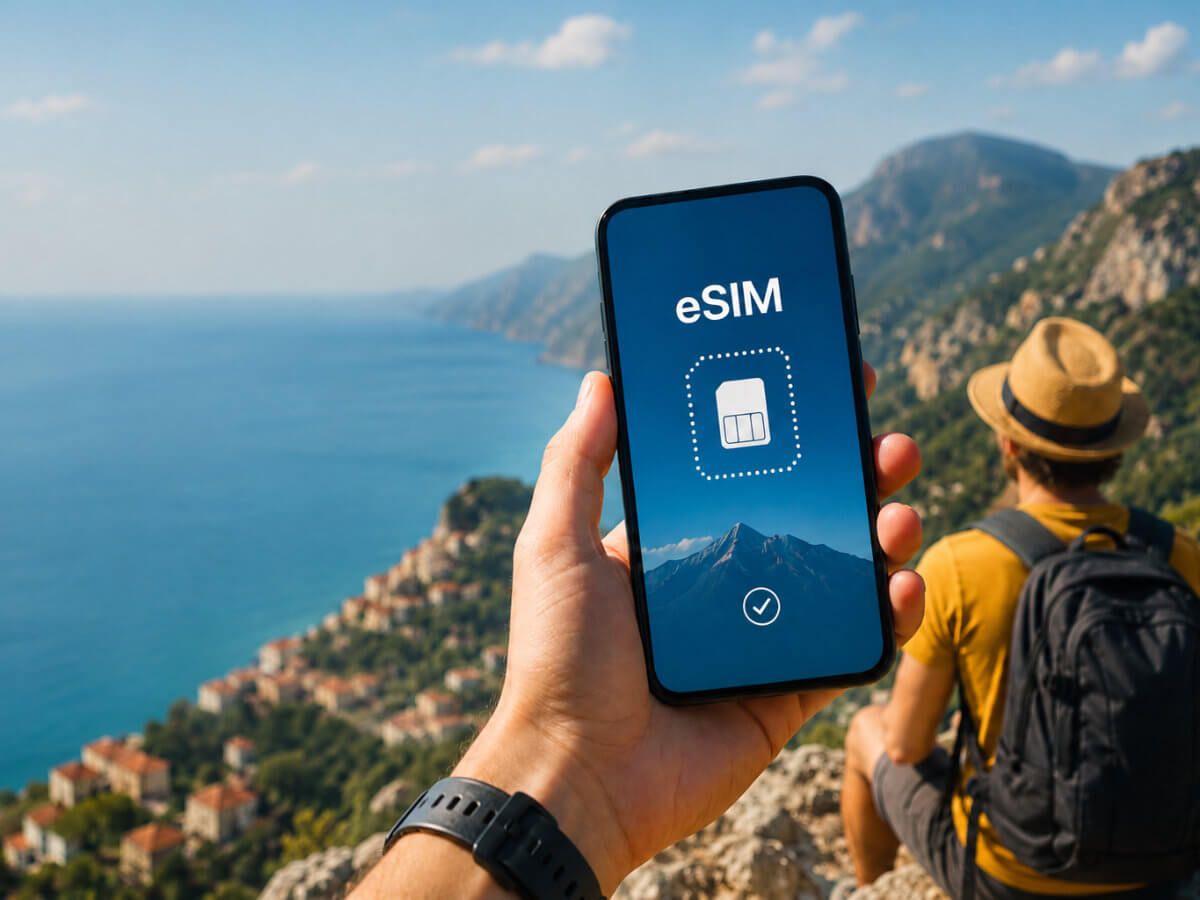
When a local number isn’t essential, you unlock the freedom to bypass voice plan markups entirely. Travelers relying on WhatsApp, Telegram, or FaceTime Audio can grab a cheap data-only eSIM, paying only for gigabytes rather than bundled minutes they never use. This approach slashes costs because carriers often charge a premium for a local voice line you might not answer. You circumvent activation fees tied to physical SIMs and avoid roaming charges for incoming calls, instead routing everything through your preferred apps. Without a local number, your plan becomes purely about bandwidth, letting you prioritize speed over unnecessary telephony features.
Dropping the local number strips away voice overhead, leaving you with cheaper, simpler data-only connectivity for app-based communication.
Combining Free Wi-Fi with a Small Data Plan
Using a cheap eSIM with a small data plan effectively requires systematically pairing it with free Wi-Fi hotspots. Before leaving a known network, download offline maps and cache streaming content. Switch off cellular data when connected to a trusted Wi-Fi network, and rely on the small eSIM plan only for essential navigation or messaging during transit. Set your phone to disable background app refresh over cellular and enable Wi-Fi calling to route voice minutes through free networks. This approach ensures you never exceed your tiny data bucket while remaining connected.
Combining free Wi-Fi with a small data plan means covering 90% of your usage via public or home networks, reserving eSIM data solely for critical moments when no Wi-Fi is available.
Common Pitfalls That Inflate Your Mobile Budget
A common pitfall with cheap eSIM plans is assuming the advertised price covers all necessary features. You might select a budget data-only plan, only to discover it lacks voice minutes, forcing you to pay high per-minute rates for essential calls. Failing to activate or deactivate auto-renewal on a low-cost plan can suddenly charge you a full monthly rate, negating any initial savings. Similarly, overlooking strict data deprioritization policies means your connection becomes unusably slow during peak hours, pushing you to buy expensive top-up packages. Even a free trial can become costly if you forget to cancel it before the billing cycle begins. Always verify a cheap plan’s true feature set and throttling rules to avoid these hidden budget inflators.
Accidental Roaming Charges on Backups
When your phone automatically backs up photos or app data to iCloud or Google Drive using a cheap eSIM’s primary network, it can silently trigger accidental roaming charges on backups if that eSIM lacks an inclusive data allowance in the country you are visiting. Even budget-friendly eSIM plans often have zero data on backup servers, so a single overnight sync can drain your balance. To prevent this, disable cellular data for backup apps or restrict backups to Wi-Fi only. A traveler might wonder, Q: How do I avoid being charged for a backup while roaming? A: In your phone’s settings, toggle off “Cellular Data” for the backup service or set it to “Wi-Fi Only” before using a cheap eSIM.
Expired Plans That Auto-Renew at Higher Rates
Auto-renewal can trap you into paying inflated rates for an expired eSIM plan. Many cheap eSIM providers quietly switch your data plan to a much higher standard price once the promotional period ends. Always disable auto-renewal immediately after purchase. Check renewal dates in your account settings, and set a manual calendar reminder to re-subscribe at the cheapest available rate. Q: How do I avoid a price hike from auto-renewal? A: Turn off auto-renewal in your provider’s dashboard right after buying the plan, then purchase a new low-cost plan yourself before the old one expires.
Small Data Top-Ups That Add Up Quickly
Even on cheap eSIM plans, repeatedly purchasing small data top-ups creates a significant budget leak. Each transaction often incurs a base fee or higher per-GB rate, making small increments deceptively expensive. You might pay $3 for 500MB three times rather than $5 for 2GB once, effectively doubling your cost per gigabyte. These micro-purchases bypass the plan’s core value, as carriers profit from urgent, low-volume refills.
- Always compare the per-GB price of a top-up pack versus your plan’s initial rate; small packs typically cost 2–3x more per GB.
- Opt for a mid-tier plan with 5GB buffer rather than relying on multiple 1GB refills during a trip.
- Disable automatic low-balance top-ups in your eSIM app to prevent surprise charges from accumulating.
- Track your daily usage to predict if a single larger top-up will cover your trip’s end, avoiding last-minute panic purchases.
Future Trends in Low-Cost Digital eSIM Services
Imagine hopping off a bus in a new city; your cheap eSIM plan auto-activates a stripped-down data bundle from a local budget carrier, costing pennies. Future trends push this further: AI will dynamically swap you between partner networks every few minutes, hunting the absolute cheapest per-megabyte rate in real-time, even if it means a one-second blink in connectivity. “How will this work with prepaid plans?” They will evolve into micro-mobility subscriptions—you pay by the hour for roaming, not by the day, throttling to 128kbps speeds after a 50MB burst to keep your monthly invoice under two dollars. The SIM card vanishes into your device’s firmware, letting you stack three separate cheap eSIM plans for different tasks: one for WhatsApp-only, one for maps, one for emergency calls.
Rivalry Between Startup Platforms and Established Giants
Startup platforms are shaking up cheap eSIM plans by offering hyper-local deals and pay-as-you-go flexibility, directly challenging established giants stuck on rigid global packages. This rivalry forces both sides to constantly undercut each other. A startup might let you buy just 1GB for a single country, while a giant dangles a massive multi-region bundle at a similar price. The key battleground? Dynamic pricing for on-the-go users. To navigate this, travelers can mix and match: use a startup’s cheap local data for one leg of a trip, then a giant’s reliable network for broader coverage elsewhere.
| Startup Platforms | Established Giants |
|---|---|
| Offer niche, single-country plans dirt cheap. | Bundle many regions, often pricier for short stays. |
| Prioritize app-based top-ups and instant activation. | Rely on prepackaged eSIMs with fixed data limits. |
| Flexible for spontaneous, location-specific needs. | Better for predictable, multi-country travel plans. |
Price Drops from New Market Entrants
The entry of new providers forces existing carriers to slash their eSIM costs, often leading to aggressive price wars on data plans. You can expect introductory offers like 50% off for the first month or drastically lower per-GB rates on regional bundles. To capitalize, monitor comparison platforms weekly, as these discounts are typically limited-time promotions designed to capture market share. Q: How quickly do price drops from new market entrants occur? A: Usually within 1–3 months of a major competitor announcing a budget eSIM tier.
User-Driven Demand for Transparent, Flat Rates
Users increasingly reject hidden fees and complex data buckets, driving demand for true flat-rate eSIM plans. Travelers now insist on a single, upfront price covering all data, SMS, and minutes within a validity period, with no throttling or surprise overage costs. This shift forces providers to offer all-inclusive tiered plans where the total cost is known before purchase. Q: Why do users prefer flat rates over tiered data? A: Because a flat rate eliminates bill shock, allowing precise budget control for trips, while tiered or pay-per-use models often lead to unexpected charges when streaming or navigating abroad.
